
Stargazing in Kielder: A Guide to Dark Skies
There’s a moment, standing in the depths of Kielder Forest on a clear night, when the view becomes genuinely awe-inspiring.
The sky is so full of stars that your brain takes a moment to recalibrate. This isn’t what the sky looks like at home. This is the sky without the light pollution, when there’s nothing between you and the universe but air.
Welcome to England’s darkest skies.
Why Kielder?
Kielder sits within the Northumberland International Dark Sky Park — the largest Gold Tier dark sky area in Europe. The combination of remoteness, low population density and the sheer scale of the forest and reservoir means that light pollution here is little to none.
The Milky Way is visible to the naked eye on a clear night. In good conditions, experienced observers can see up to 2,000 stars. On the very best nights — cold, clear, still — the sky above Kielder is as close to a truly dark sky as you’ll find anywhere in England.
Kielder Observatory
The jewel in the crown is Kielder Observatory — perched on a hillside above the forest, away from any roads or buildings, it hosts the UK’s largest public stargazing programme.
Sessions include:
- Guided stargazing evenings — led by astronomers, with time on the telescopes
- Solar viewing sessions — daytime observations of the sun through specialist filters
- Astrophotography nights — for those who want to capture the sky as well as observe it
- Special events — meteor showers, planetary alignments, and the annual Kielder Autumn Starcamp each October
Sessions book out well in advance, particularly summer and autumn evenings, and any event coinciding with a notable astronomical event. Book at kielderobservatory.org as early as possible.
DIY Stargazing
However, you don’t need a session at the Observatory to experience Kielder’s dark skies. The Dark Sky Park also has several designated Discovery Sites around the reservoir, accessible without booking — the Elf Kirk car park on the south shore is one of the most popular and easiest to reach.
What you need:
- A clear night (check the forecast — cloud cover is the enemy)
- Warm clothing (it gets very cold very quickly once the sun goes down)
- A red-light torch (white light destroys your night vision; red light preserves it)
- At least 20 minutes for your eyes to fully adapt to the dark
- Patience — and willingness to simply look up
A pair of binoculars will reveal far more than the naked eye, but they’re not essential. Some of the most memorable experiences at Kielder’s dark sky sites involve nothing more than lying on your back and letting the sky be as big as it is.
What to Look For
The Milky Way — our own galaxy, visible as a faint band of light across the sky on clear nights from late spring through autumn. In winter, it sits lower on the horizon but is no less impressive.
The planets — Venus, Jupiter, Saturn and Mars are all visible to the naked eye at various points in the year, and through binoculars or a small telescope become something else entirely.
Meteor showers — the Perseids (mid-August) and the Geminids (mid-December) are the most reliable annual events, with dozens of meteors per hour at their peak. Kielder is one of the best places in England to watch them.
The aurora borealis — not guaranteed, but not as rare as you might think. Northumberland is far enough north, and Kielder dark enough, that the Northern Lights are occasionally visible. Follow the Space Weather apps and keep an eye on alerts during periods of high solar activity.
Stargazing at Calvert Kielder
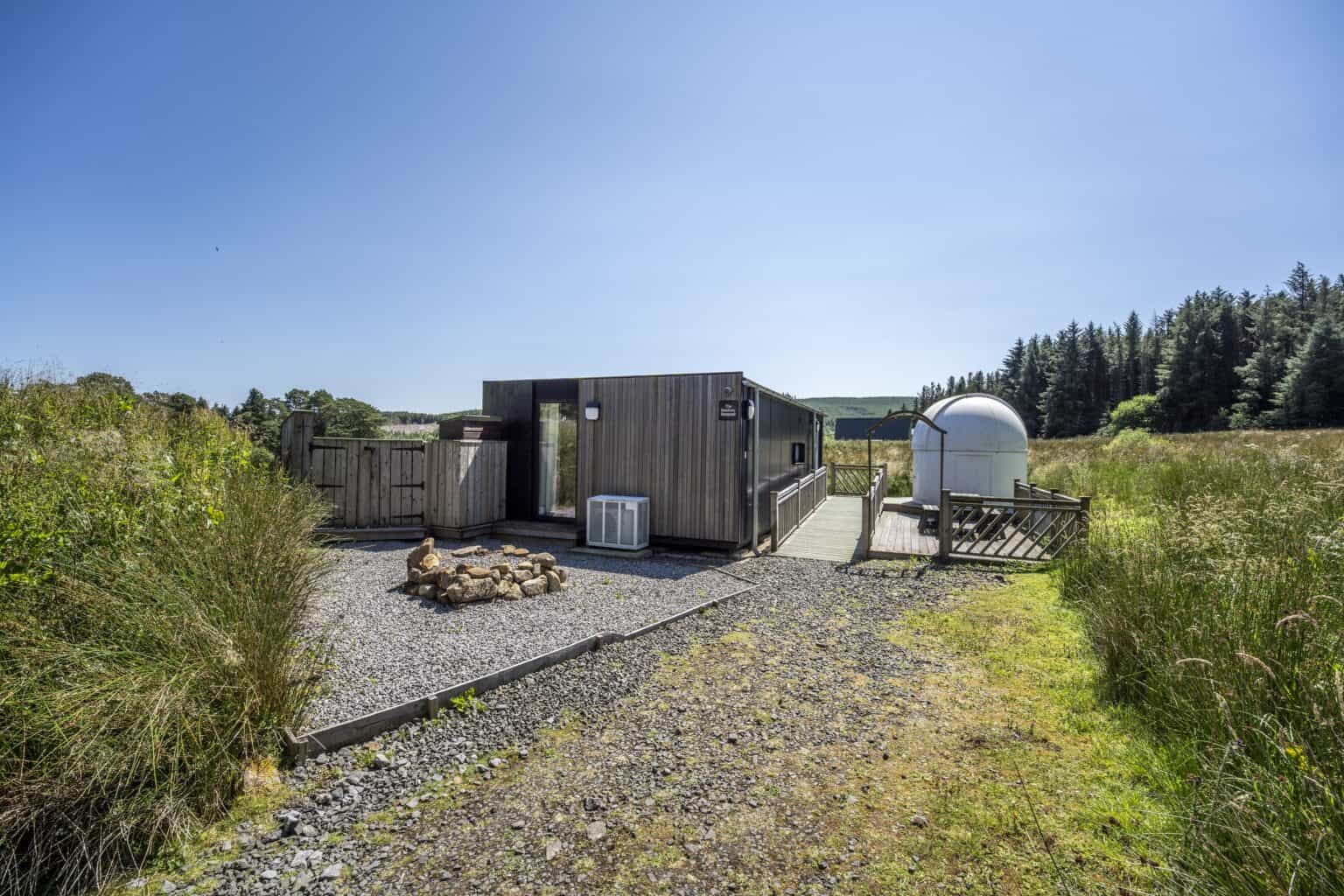
*Bradbury, Bradbury Stargazer, McArdle, Reece, Sara J, Sky Den, Spedding and Spoor Lodges contain compact spotting scopes. Straker Lodge contains a larger telescope.