
Red Squirrels in Kielder: Best Places to See Them and When in 2026
Kielder Forest is one of the few places in England where you can reliably spot a red squirrel in the wild.
That’s no small thing (I mean spotting them, squirrels themselves are fairly small). Red squirrels were once common across the whole of Britain. Now they survive in a handful of strongholds — parts of Scotland, some islands, and the Northumberland forests, with Kielder at the centre. England has around 15,000 red squirrels left. About 50% of England’s red squirrels live in Kielder. Coming here to see them isn’t just a nice thing — it’s a chance to encounter an animal that has genuinely almost vanished from the country.
About 50% of England's red squirrels live in Kielder.
Why so many Red Squirrels in Kielder?
The answer is the trees. That’s why you spot so many red squirrels in Kielder. They do well in large conifer forests, where they can forage for seeds in the pine cones that grey squirrels find less appealing. Kielder’s vast planted forest — England’s largest at around 250 square miles — gives them both food and shelter, and its remoteness has helped keep grey squirrel incursion limited. There are simply fewer points of contact with the lowlands where grey squirrels dominate.
Active conservation work also plays a part. Organisations including Red Squirrels Northern England monitor and protect the population, manage feeding stations, and run surveillance to spot and respond to grey squirrel spread. Volunteers and landowners across Northumberland are part of the same network. The numbers have been stable, and in some areas have grown. It’s one of the more quietly remarkable conservation stories in the north of England.
Where to spot them
You can spot red squirrels in Kielder Forest in several places, but a few spots give you a better chance than most.
- Kielder Castle and the surrounding woodland is where many people have their first sighting. The castle area has bird feeders and squirrel feeding stations, and the animals have become used to people moving around. It’s a good place to start, especially if you have younger visitors or members of your group who find longer trails harder going.
- Leaplish Waterside Park on the southern shore of the reservoir is another good spot, especially early morning before the car park fills up. The mix of pines and open ground here suits the squirrels, and the café makes it an easy base.
- The forest trails north of Kielder take you deeper into the trees, away from the busier visitor areas. Patient walkers are regularly rewarded here. These trails are quieter and the squirrels less habituated to people, which means sightings feel different — more like an encounter than a visit to a feeding station.
Early morning is the best time. Red squirrels are most active in the two hours after dawn, and again in the late afternoon. They’re less visible in the midday hours.
What to look for and and when
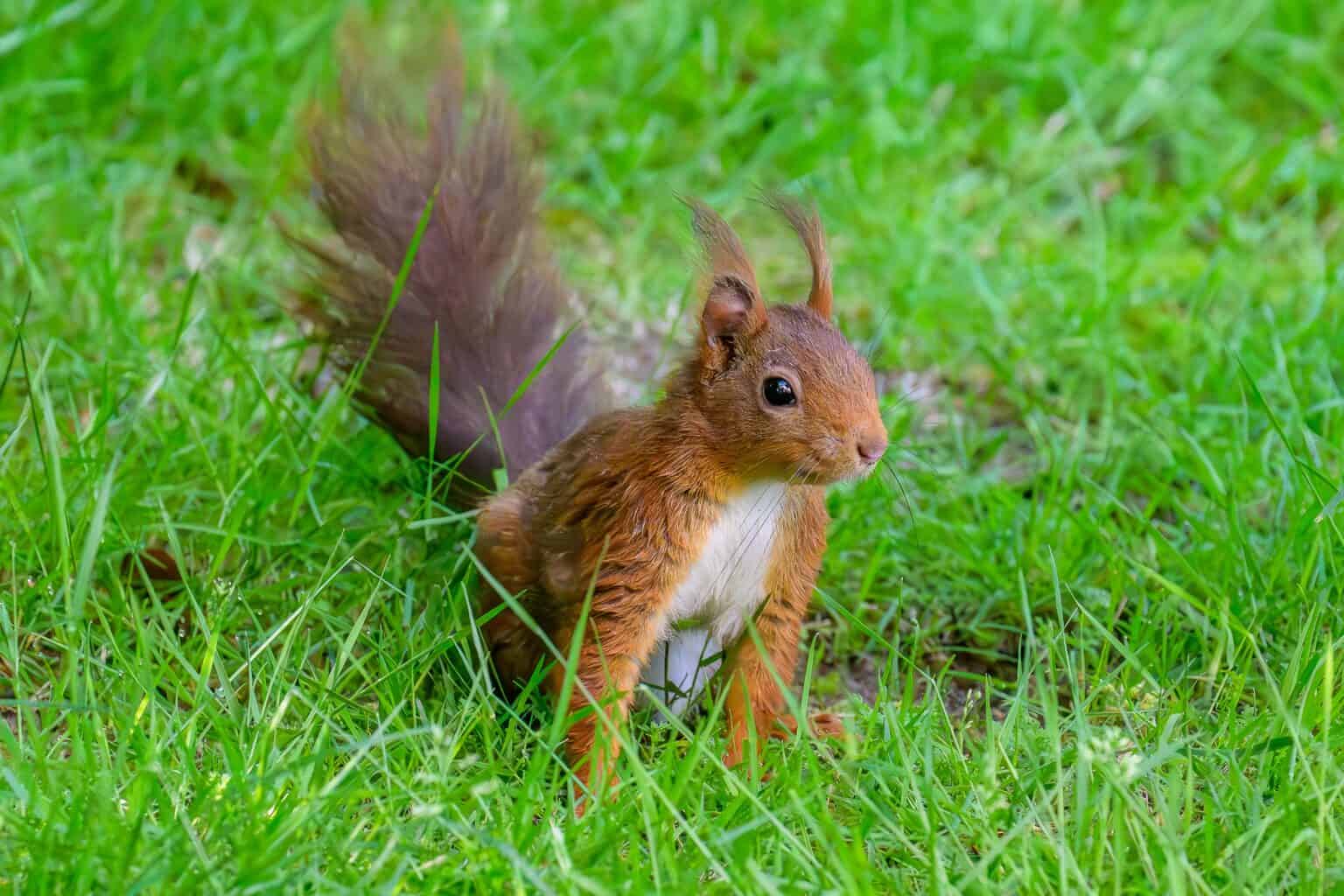
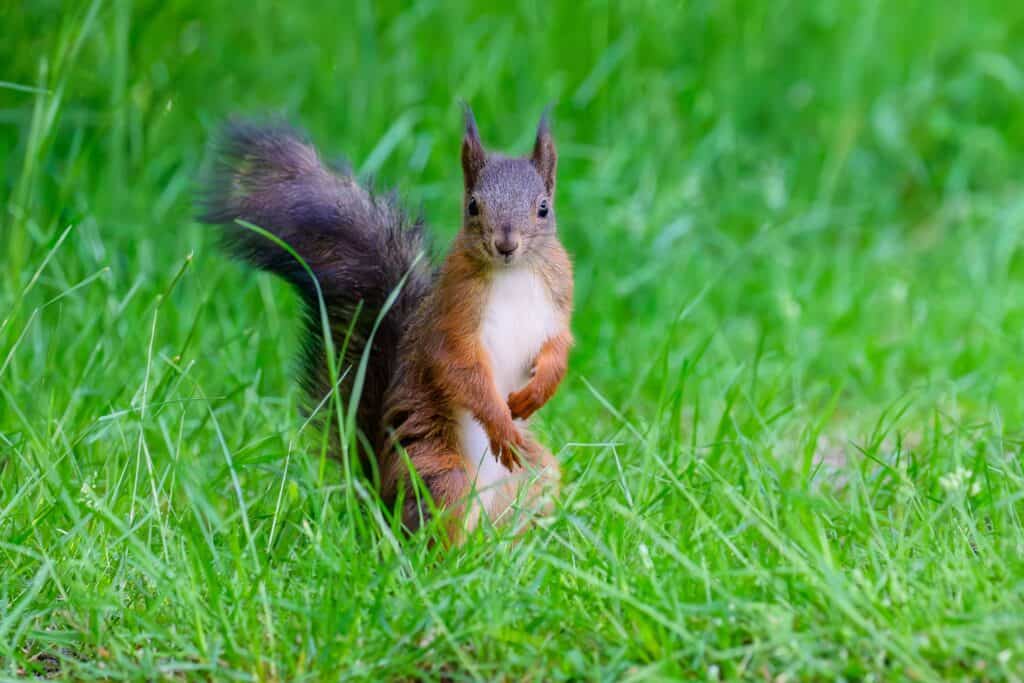
Red squirrels are smaller than grey squirrels, with a distinctly russet coat that deepens to chestnut in autumn. The ear tufts — their most recognisable feature — are most pronounced in winter and early spring, giving them a slightly theatrical look against bare branches. In summer the tufts reduce and the coat can bleach slightly in the sun, making identification a little trickier for the uninitiated.
Their movement is quick and direct. They tend to stay higher in the canopy than grey squirrels, dropping to the ground only to forage or move between trees. If you hear a fast chattering from high in the pines, stop and look up — that’s your cue.
Autumn is a particularly good time to visit. Squirrels are busy caching food ahead of winter, which means more movement, more time on the ground, and more opportunity to watch them at work. Spring brings young squirrels — called kittens — beginning to venture outside the drey, usually from April onwards. Either season gives you a different kind of sighting.